
Managing Long-Lead Materials in Construction
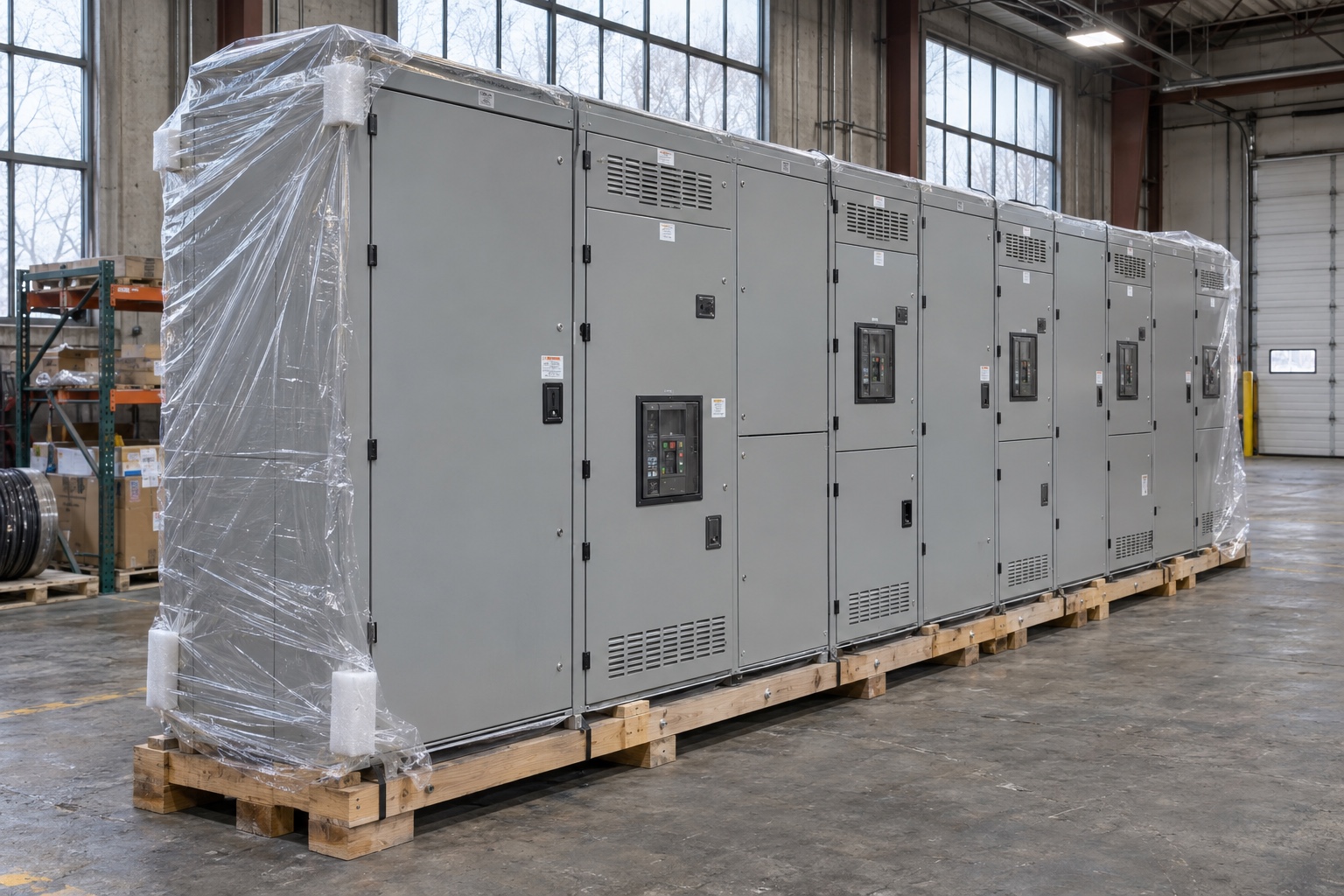
An electrical subcontractor’s proposal lists a 60-week lead time for switchgear. The construction schedule calls for installation in 45 weeks. Before the subcontract is awarded, the project team already has a procurement decision to make.
That decision may involve an early equipment release, another manufacturer, or a different construction sequence. Each option takes time to evaluate, particularly while the design is still developing.
Equipment availability continues to put pressure on those decisions. Skanska’s Fall 2026 Construction Market Trends Report puts medium- and low-voltage switchgear beyond 52 weeks, pad-mounted liquid-filled transformers at 60 to 85 weeks, and HVAC equipment at 30 to 52 weeks. Large data center generators can exceed 100 weeks. These figures reflect Skanska’s supplier and regional market data, vary by project, and exclude submittal preparation and review.
For a project engineer or project manager, the work starts with establishing when each item is needed, what has to happen before manufacturing can begin, and who is carrying the next action.
Start with the equipment dates in the proposals
Switchgear, transformers, generators, chillers, air handling units, elevators, and curtain wall systems are familiar long-lead items. Their urgency depends on the project schedule. A 20-week delivery may be manageable on new construction and difficult to accommodate on a fast-track renovation.
During estimating and buyout, the team can compare the equipment schedules and specifications with subcontractor proposals and the preliminary construction schedule. Lead-time qualifications deserve the same attention as pricing exclusions. A proposal that meets the budget may still carry a delivery date the project cannot accommodate.
In the switchgear example, the 15-week gap needs to reach the owner and design team while there is still time to consider alternatives. Waiting until the electrical subcontract is fully executed leaves fewer options.
Early procurement can help, provided the team establishes what it is authorizing. The equipment requirements need to be developed enough to place the order, with responsibility agreed for purchasing, subsequent design changes, cancellation, storage, and insurance.
JE Dunn describes a project where owner authorization allowed long-lead procurement to begin before the main contract was executed. The team prioritized submittals and worked with trade partners and manufacturer representatives to release equipment earlier. Its air handling units later slipped by a month because of factory staffing shortages, making that earlier start particularly useful.
Allow time before manufacturing starts
A supplier’s quoted lead time needs a starting point. Depending on the manufacturer, production may begin after an accepted purchase order, approved shop drawings, a formal fabrication release, or a required payment. The project team needs to confirm which condition applies before using the quote in the schedule.
Consider an air handling unit with a quoted manufacturing duration of 38 weeks. Working backward from its required delivery date might produce the following plan:
| Procurement activity | Duration |
|---|---|
| Submittal preparation | 4 weeks |
| Submittal review and approval | 3 weeks |
| Manufacturing | 38 weeks |
| Shipping and delivery | 2 weeks |
| Planning allowance | 3 weeks |
| Total | 50 weeks |
Under these assumptions, submittal preparation needs to start about 50 weeks before delivery. The plan also assumes the design is ready, the subcontractor can proceed, and the submittal clears review without a resubmission.
The review period should be discussed with the design team. If the package needs priority treatment, the reviewers need to know that before it arrives. An unresolved controls requirement or equipment selection can hold up the release even when most of the submission is acceptable.
For critical equipment, carry these milestones into the project schedule and connect them to installation, startup, testing, and commissioning. That gives the team a way to evaluate a late approval while there is still an opportunity to recover.
Follow approval through to the factory release
An approved submittal can remain on the procurement log for weeks without the equipment entering production. The subcontractor may still be incorporating comments, finalizing its purchase order, or waiting for the manufacturer to accept the release.
The submittal and procurement logs need to show that progression. For each critical item, the team should be able to find:
- The equipment tag, specification reference, subcontractor, and manufacturer.
- The required delivery date and the schedule activity it supports.
- The quoted lead time, when it was confirmed, and what starts the clock.
- Planned and actual submittal, approval, and fabrication-release dates.
- The current shipping and delivery forecast.
- The outstanding action, responsible person, and due date.
If the AHU submittal is approved on Tuesday, the next follow-up might be confirmation that the manufacturer has accepted the release and reserved a production slot. Recording that action makes the status more useful than leaving the item marked “Approved.”
Ask what supports the delivery forecast
Once an order is placed, the team still needs updates through fabrication. For critical equipment, a weekly procurement review can establish whether the manufacturer has acknowledged the order, whether production milestones are being met, and whether any decisions or components are holding up progress.
The wording of an update matters. A date carried forward from the original quotation has a different basis from a scheduled factory completion or a confirmed carrier pickup. Order acknowledgments, manufacturer updates, and shipping records help the team understand how much confidence to place in the forecast.
Suppose the AHU supplier moves delivery back three weeks. The follow-up should establish the reason, whether the date is still an estimate, and what the supplier is doing to recover. The revised forecast belongs in the procurement log alongside the supporting correspondence and the next agreed update.
For equipment that controls a major milestone, a call with the manufacturer and subcontractor may resolve more than another round of forwarded emails.
Check a delivery change against the remaining work
A three-week slip does not automatically delay completion. Its effect depends on when the equipment is needed and what follows its installation.
For the AHU, the team needs to look beyond setting the unit. Duct connections, power, controls, manufacturer startup, testing, and commissioning may all depend on its arrival. Available float can disappear quickly if those activities are already tightly sequenced.
Reviewing the current schedule with the superintendent and affected trades helps establish what can still move. The team might resequence adjacent work, arrange a partial shipment, expedite transportation, or evaluate another approved equipment option.
A substitution needs its own coordination. An available unit may have different dimensions, electrical loads, controls, structural requirements, or maintenance clearances. Those differences need to go through the applicable design and contract review before the team commits to the replacement.
Keep the revised dates, expected effects, recovery measures, and owner communications together. Where the contract requires notice, the procurement record should support a clear account of what changed and when.
Coordinate delivery with the field
As shipment approaches, the procurement discussion becomes more specific. The superintendent needs to know how the equipment will reach its installation location, what access must remain open, and whether lifting equipment or temporary storage is required.
An early delivery can create extra handling and protection costs if the installation area is unfinished. A late delivery may miss a planned crane pick or arrive after an opening has been closed. Confirming these arrangements before dispatch gives the supplier and field team time to adjust.
Receiving responsibilities also need to be clear, particularly for owner-furnished equipment. Establish who will unload, inspect, document damage, protect the equipment, and accept custody. On arrival, check the equipment identification and condition, confirm the required accessories and documentation, and record discrepancies promptly.
Delivery should also be coordinated with manufacturer startup and commissioning availability. Having the equipment on site does not establish when the system can be put into service.
Keep supplier updates connected to the project records
Much of procurement tracking involves reconciling information the team already has. The approved submittal may be in Procore, the latest factory date in an email, and the installation sequence in Primavera P6. Meeting minutes may carry an unresolved decision that affects all three.
When a supplier revises the AHU delivery date, the person maintaining the procurement log needs the update. The superintendent and scheduler need to know whether it changes the planned work. If recovery requires an owner or design decision, that request needs an assigned person and a date.
A useful procurement review brings those records together around the equipment being discussed. The team can see the latest commitment, what has changed since the previous review, and what needs to happen next. Over the months between an equipment selection and its installation, that continuing follow-up gives project teams time to work through problems before crews are waiting on site.