
How to Write a Construction Scope of Work
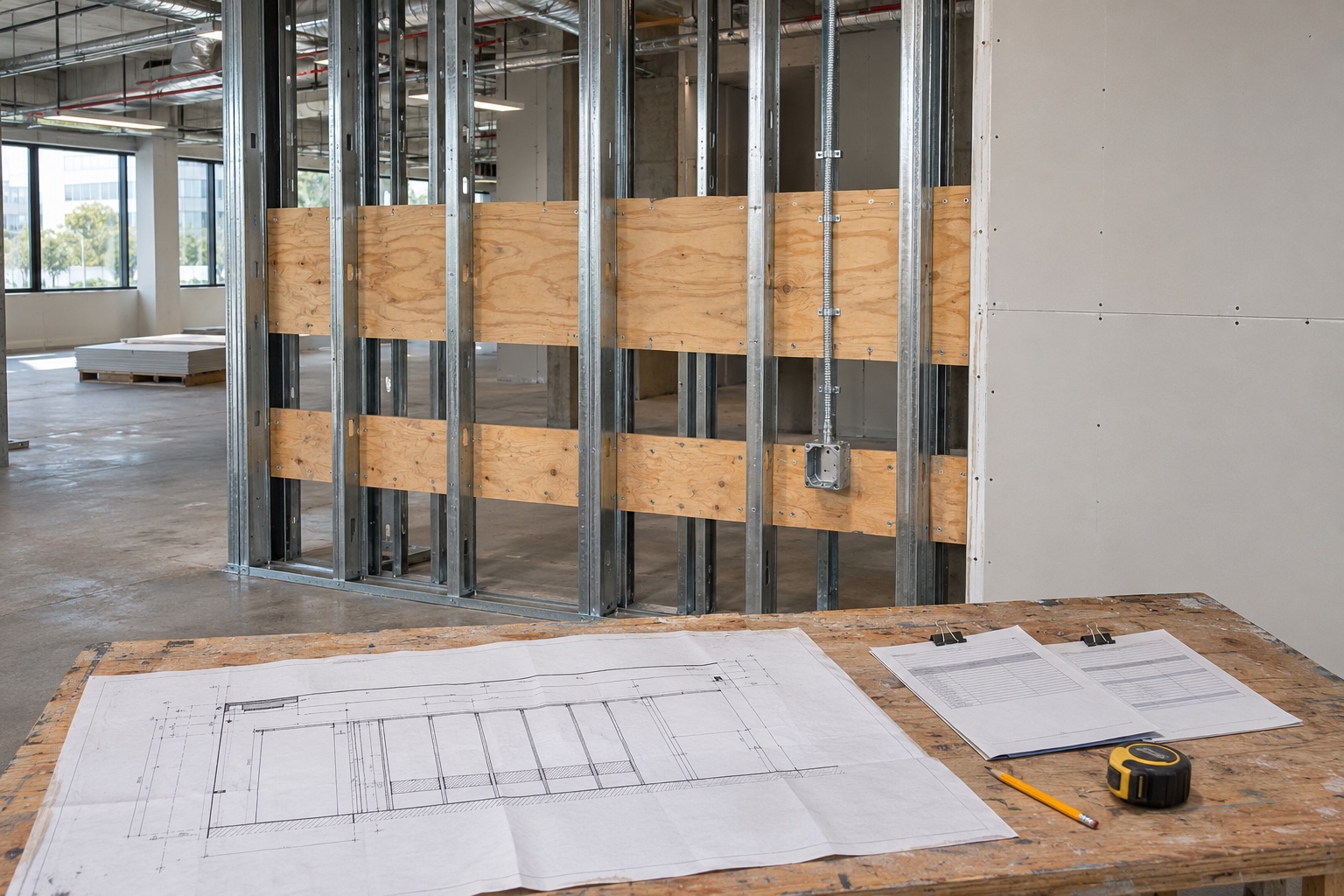
Consider a drywall proposal that excludes blocking for wall-mounted equipment. The millwork proposal assumes the drywall contractor is providing it. If both exclusions carry through buyout, the project team may discover the gap when the walls are already closed and the equipment is ready to install.
A trade scope gives the general contractor a place to resolve that responsibility before award. It describes the work a subcontractor is expected to furnish and install, the requirements that affect its price, and how its work connects with adjacent trades. During bidding, it gives subcontractors a common basis for their proposals. After buyout, the agreed scope becomes a reference for the people managing the work.
Preparing that document involves reading across drawings, specifications, proposals, and clarifications. A drywall package provides a useful example because so many of its responsibilities meet another trade’s work.
1. Establish which documents the scope covers
Start with the drawing set, specifications, and addenda being issued for pricing. Identify their dates and revisions so bidders can confirm that they are working from the same information.
For drywall, the review extends beyond partition plans. Wall-type details establish assembly requirements. Reflected ceiling plans show ceiling conditions and transitions. Door schedules and details may affect framing around openings. Mechanical and electrical drawings can introduce access requirements, equipment supports, or services that need to pass through the assemblies.
The specifications add requirements for materials, installation, performance, submittals, and quality control. Reviewing these alongside the drawings helps identify work that might be missed if the scope were prepared from floor plans alone.
An existing trade template can provide a starting structure. Each inclusion still needs to be checked against the current project, particularly items carried over from a different building type or construction sequence. The finished scope should work alongside the identified contract documents, with enough detail to explain how the package has been assembled.
2. Describe what the subcontractor will furnish and install
Open with a short description of the package, then identify the activities and assemblies the subcontractor is expected to price.
For a drywall package, the description might begin:
Furnish and install the interior metal stud framing and gypsum board assemblies shown in the identified drawings and specifications, including the labor, materials, equipment, and supervision required for the following work.
The inclusion list can then address:
- Interior non-load-bearing metal stud framing.
- Gypsum board at walls, partitions, and ceilings.
- Moisture-resistant and fire-rated board where specified.
- Partition insulation assigned to the package.
- Taping, joint treatment, and specified finish levels.
- Head-of-wall details and associated rated joint systems.
- Blocking and backing assigned to the drywall subcontractor.
- Framing around coordinated mechanical, electrical, and plumbing installations.
These items provide a structure for review. The actual scope needs the project’s locations, assembly requirements, and agreed trade assignments.
Broad descriptions can leave pricing questions unresolved. If different areas require different finish levels, identify them through the applicable schedules or specification references. If the package includes backing, establish which backing and where. A general inclusion becomes more useful when a bidder can connect it to a defined requirement.
3. Assign the work where trades meet
The blocking example needs more than an instruction to “coordinate with millwork.” Someone has to identify the required locations and loads, provide the backing, and install it before the wall closes.
Those responsibilities may be divided between contractors. The scope should make that division clear and remain consistent with the adjoining package.
A responsibility review can focus on questions such as:
| Item | Responsibility to establish |
|---|---|
| Blocking and backing | Who identifies requirements, furnishes the material, and installs it? |
| Access panels | Who selects, furnishes, and installs each panel? |
| Firestopping and rated joints | Who carries each type of penetration seal or joint system? |
| Cutting and patching | Who makes openings and restores affected finishes? |
| Sleeves and openings | Who provides layout, materials, and installation? |
| Equipment supports | Who furnishes and installs them, and who supplies the equipment requirements? |
| Cleaning | What cleanup and final cleaning does each package include? |
A responsibility matrix can carry these assignments across the trade packages. If access panels are furnished by mechanical and installed by drywall, both scopes should reflect that arrangement.
The same review catches duplicated work. Two subcontractors may both carry an item, adding cost without making the responsibility clearer. Where a proposal says “by others,” identify the intended party and confirm that its package includes the work before accepting the exclusion.
4. Include the conditions that affect installation
The same quantity of drywall can require very different labor depending on access, sequencing, and working hours.
An occupied renovation may require evening work, daily cleanup, limited material deliveries, and protection of areas that remain in use. A phased project may require the subcontractor to return to several areas as other trades finish. Those conditions belong in the bid information so subcontractors can account for them.
For the drywall package, identify the required sequence around framing inspections, work inside partitions, and above-ceiling coordination. The team also needs an agreed process for confirming that an area is ready to close.
Describe the temporary facilities and services available to the subcontractor. Hoist access, temporary power, dumpsters, unloading areas, and storage arrangements can all affect the installation plan and price. Where access is shared or limited, explain the restriction.
Schedule requirements should refer to the applicable milestones and project schedule. If the team expects multiple mobilizations, accelerated work, or a particular phase to finish early, bidders need that information before submitting their proposals.
5. Carry submittals and closeout into the package
The scope also needs to account for the work required before and after installation.
For drywall, that may include product data, assembly information, samples, mockups, and documentation required for inspections. Identify the subcontractor’s submissions and connect their timing to procurement and installation. A mockup that needs acceptance before production work should appear in the plan early enough to serve that purpose.
Closeout requirements vary by trade. Warranties, record information, attic stock, operation and maintenance manuals, and training may be required by the project documents. Include the applicable items in the package so the subcontractor can price and plan for them.
These requirements are easier to manage when they are established during buyout. Waiting until closeout to determine who owes a document or spare material creates another round of scope discussions when the team is trying to finish the project.
6. Compare proposals against the issued scope
Ask bidders to distinguish their base price from alternates, allowances, unit prices, and requested breakdowns. An optional ceiling system, for example, should be clearly identified so each bidder prices it on the same basis.
Proposals will still contain qualifications. Review those against the issued scope before comparing totals.
Suppose two drywall bids are $40,000 apart. The lower proposal excludes partition insulation, blocking, and access panels, while the higher proposal includes them. The estimator needs to establish the cost and responsibility for those differences before deciding how the bids compare.
Some questions require a revised price. Others require confirmation of what the bidder already included. Keep those responses with the comparison, including any changes to materials, quantities, schedule assumptions, or installation conditions.
The issued scope provides the reference for this review. If several bidders exclude the same required item, check the package and resolve the assignment. A comparison of the proposals alone may leave the shared omission unnoticed.
7. Carry the negotiated scope into the subcontract
By the end of buyout, the selected subcontractor’s offer may have changed several times. An exclusion has been withdrawn, an alternate accepted, or responsibility for an access panel transferred to another trade.
The final scope and subcontract value need to reflect those decisions. Review the selected proposal, written clarifications, accepted alternates, and final inclusion and exclusion lists together. Identify which documents will form part of the agreement and resolve conflicting descriptions through the contract’s document requirements.
AIA’s instructions for A401–2017, for example, call for the subcontract work and exclusions to be identified in Article 8 and the subcontract documents to be listed in Article 15. That provides a useful reference for the distinction between describing the work and identifying the documents that establish the agreement.
Before issuing the final package, confirm that:
- The drawings, specifications, revisions, and addenda are identified.
- Required work is assigned, including items excluded from adjacent trades.
- Schedule, access, temporary facilities, and sequencing requirements are included.
- Submittals, inspections, testing, and closeout requirements are accounted for.
- Alternates, allowances, and negotiated clarifications match the agreed price.
The project team taking the package into construction should have the same scope that was settled during buyout. When the superintendent asks who installs the backing, the answer should be available in the agreed documents, without having to reconstruct the negotiation from old emails.