
How to level bids with AI
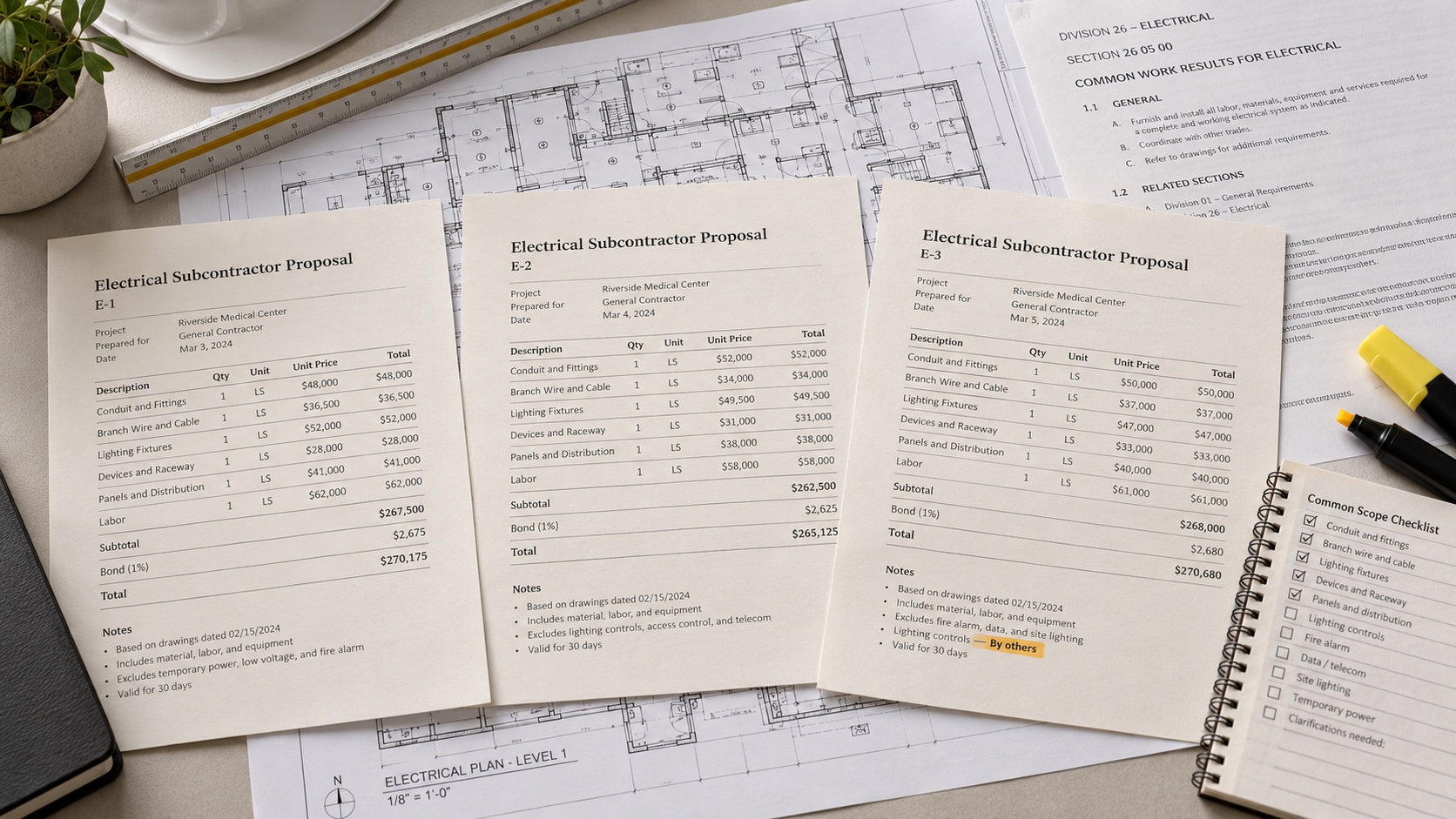
When electrical bids come in, an estimator may have five or six proposals to compare, each organized a little differently. One subcontractor provides a system-by-system breakdown. Another offers a lump sum with three pages of qualifications. Alternates and unit prices arrive in separate attachments, sometimes followed by an updated proposal the next morning.
The estimator already knows how to build a bid level. Reading the proposals, entering the values into a common sheet, checking exclusions against the bid documents, and preparing clarification questions still takes time, particularly when several trade packages are due in the same week.
Much of that preparation can be handed to AI. With the issued bid package and subcontractor proposals, a Clevis bot can assemble an initial comparison and surface the items an estimator needs to review. The estimator can then spend more time on bidders' qualifications, scope decisions, and the discussions that lead to an award recommendation.
Start with the documents everyone priced
For an electrical package, the starting material might include Division 26, electrical drawings, the scope sheet, addenda, and the instructions to bidders. These establish the requirements the proposals are supposed to cover. An estimator may already have a leveling template for the trade; an AI bot can use that structure or prepare a preliminary checklist from the issued documents.
The checklist becomes the reference for reviewing each proposal. It might include temporary power, lighting controls, distribution equipment, fire alarm interfaces, testing, and closeout requirements. The bot can carry the drawing or specification reference beside each requirement so the estimator can inspect the source when a bidder's wording is unclear.
Using the bid package matters because subcontractors sometimes make the same assumption. If all three proposals are silent about a required fire alarm interface, comparing the proposals only against one another may leave the question unanswered. A checklist prepared from the project documents gives the estimator a place to record it.
An electrical bid with a familiar qualification
Take three illustrative electrical bids: $1,180,000 from Bidder A, $1,225,000 from Bidder B, and $1,210,000 from Bidder C. The proposals are close enough that differences in scope could affect the order.
On page five of Bidder A's proposal, the qualifications state: “Temporary power and associated distribution by others.” The project scope sheet assigns temporary power distribution to the electrical subcontractor. Bidder B explicitly includes the work, while Bidder C doesn't address it.
An estimator reviewing the package would catch that qualification and decide how to carry it in the comparison. A bot can do the initial reading, extract the three positions, and link them to the relevant scope sheet language. It should leave Bidder C's position as unconfirmed until the subcontractor answers; silence doesn't establish what the bidder priced.
Build a comparison the estimator can use
The first-pass bid level brings the prices and qualifications into one view. For the temporary power item, the three proposals would appear like this:
| Bidder A | Bidder B | Bidder C | |
|---|---|---|---|
| Submitted bid | $1,180,000 | $1,225,000 | $1,210,000 |
| Temporary power | Excluded | Included | Unconfirmed |
| Addenda | Acknowledged | Acknowledged | Acknowledged |
Bidder A's submitted price is $45,000 below Bidder B's. Suppose the estimator uses an available estimate to carry a $65,000 temporary-power allowance for Bidder A. Its evaluated total becomes $1,245,000, compared with Bidder B's $1,225,000. Bidder C still needs a scope clarification before its price can be evaluated on the same basis.
The $65,000 belongs in the leveling adjustment, separate from the subcontractor's submitted price. Until Bidder A issues a revised proposal, the allowance represents the estimator's assessment of the missing work. A bot can apply the adjustment supplied by the team and keep its basis attached; it shouldn't invent a number to make the table look complete.
The same review can capture allowances, alternates, schedule qualifications, and the assumptions each bidder makes about work assigned to adjacent trades. A good first pass gives the estimator a manageable set of exceptions with the original language readily available.
Let the bot prepare the follow-ups
With the comparison assembled, the estimator can ask the bot to draft clarification questions. Bidder A needs to provide an add price for temporary power distribution. Bidder C needs to confirm whether the work was included in its base proposal. The bot can pull the appropriate scope reference into each question and prepare them for review.
Subcontractor responses often create another round of work. One bidder sends a new PDF with its revised price. Another replies by email that an exclusion has been withdrawn. A third changes an alternate and also qualifies the equipment lead time. Each response should be reconciled with the earlier proposal before the leveling sheet is updated.
AI can compare the revisions, identify which line items or qualifications changed, and help maintain the history of the bid level. Keeping the original and revised prices visible is useful when the team returns to the comparison during an award review.
What still needs an estimator
An estimator's evaluation extends well beyond the submitted amounts. The team may know that one subcontractor has a strong record on occupied renovations, while another is better suited to large new construction. Manpower, current workload, schedule commitments, procurement plans, and previous performance all influence the award recommendation.
Those considerations need conversations and professional judgment. The same is true of unclear scope boundaries. A bot can find a qualification and prepare the question, but the estimator decides how to interpret the contractual requirement and whether the bidder's response is acceptable.
AI can also miss a note, misread a scanned attachment, or associate a proposal with an outdated drawing revision. The source references matter because they let the estimator check consequential findings without repeating the entire document review.
A comparison that stays useful as bids change
The initial bid tab is rarely the last version. Addenda, clarifications, and best-and-final proposals can change both the pricing and the work each subcontractor offers. Comparing those revisions is another repeatable task that can be delegated to a bot.
An estimator might begin the week with a prepared scope comparison and end it with a reviewed set of clarifications, updated prices, and notes for an award recommendation. The same process applies to mechanical, drywall, concrete, or any other package with enough bidders and qualifications to keep the team moving between documents.
Giving AI the document preparation and revision tracking lets the estimating team use its time on evaluating scope, working with subcontractors, and making the calls that shape the project before construction starts.